Your team loses time on work that could run on its own.
Systems, integrations and AI to cut rework, organize orders and speed up customer service.
Where your team's time goes.
And your customers feel it in the wait.
Process stuck in spreadsheets and WhatsApp
Every order passes through three people, and nobody knows where it stands.
Systems that don't talk to each other
The same data gets typed into the ERP, the CRM, and the finance spreadsheet.
All day on repetitive tasks
Reading, sorting, copying, and replying fills the day of the people who should be deciding.
The order comes in. Your team knows the next step.
An example of how it applies, with a customer order. Anything that needs approval stays with your team.
- In
Order received
It arrives by WhatsApp, email or website, and an agent picks out the customer, items and deadline.
- Organized
Logged in the system
The data goes in only once. Nobody retypes it in the ERP or the spreadsheet.
- Moving
Owner notified
Whoever handles the order gets the alert, and the customer follows the status without having to ask.
Seven ways to take work off your team's hands.
-
 01
Custom systems
Web systems, customer portals, and internal dashboards built for the way your operation already works.
-
 02
AI agents
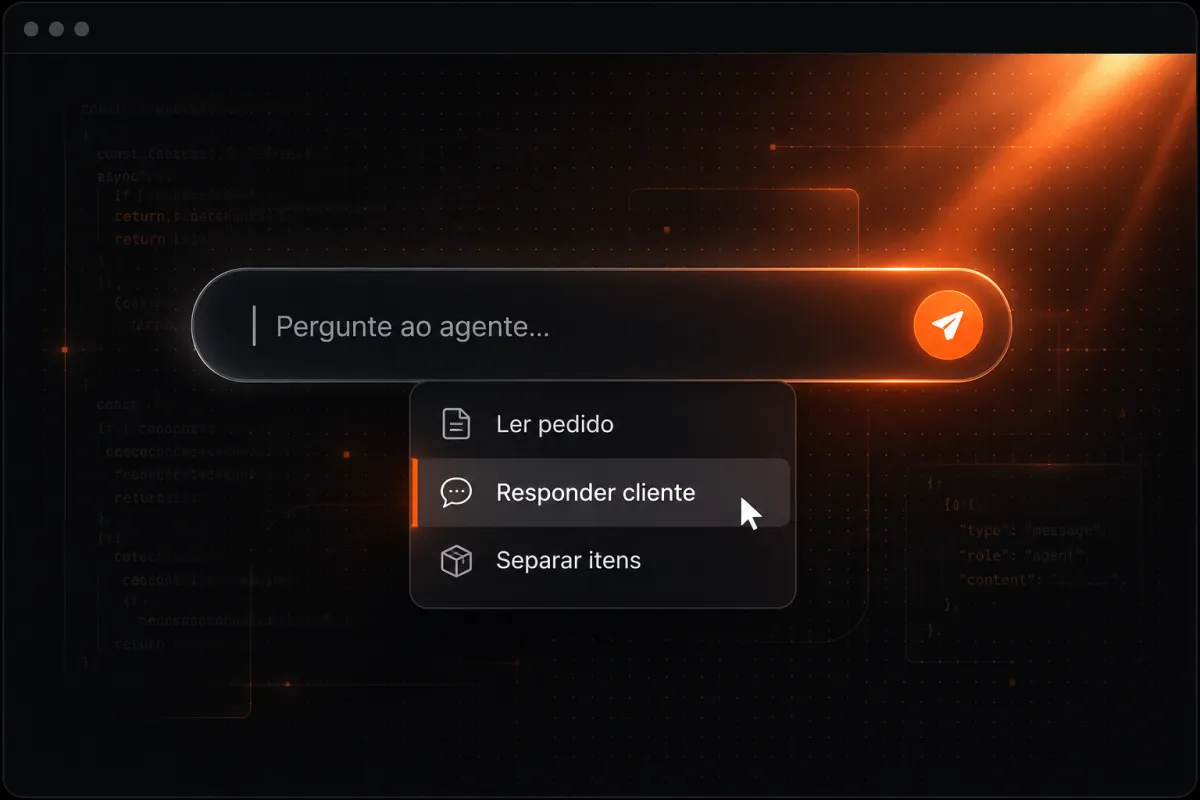
Agents that read WhatsApp and email, understand the request, and leave the reply ready.
-
 03
Process automation
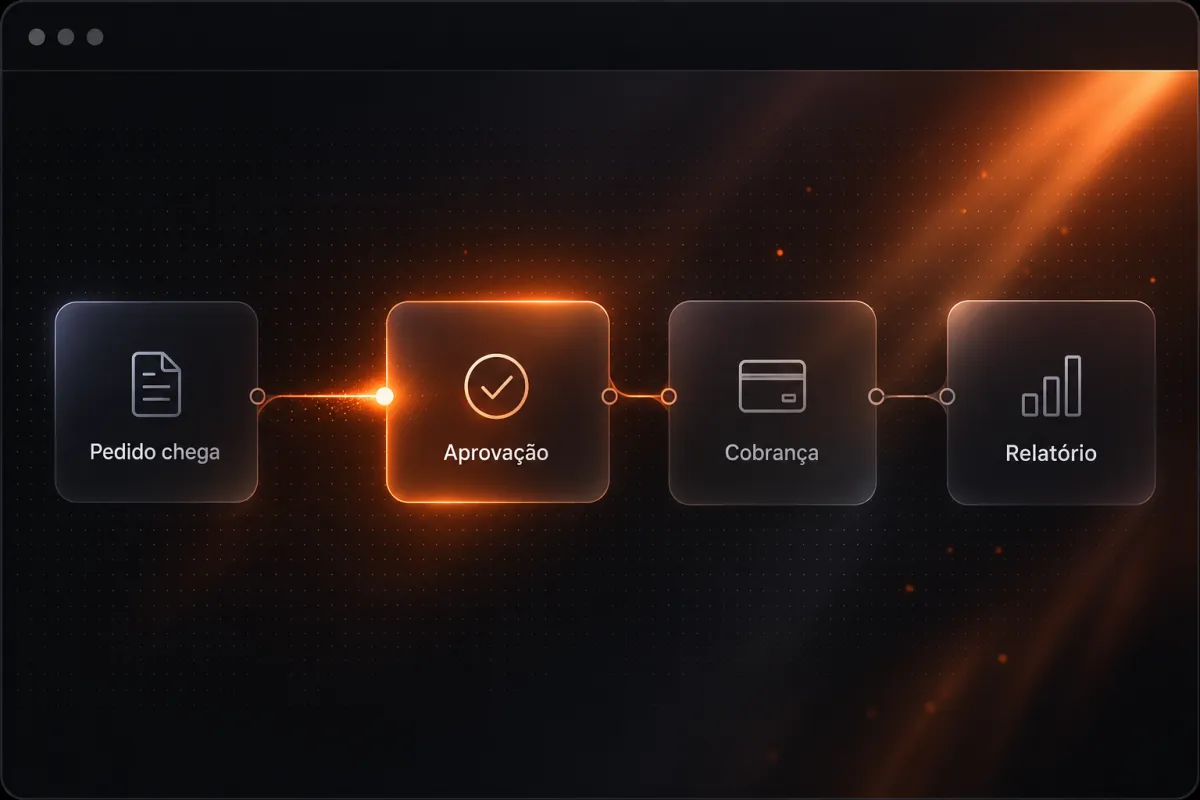
Approvals, billing, and reports that go out on time, with nobody having to remember.
-
 04
APIs and integrations
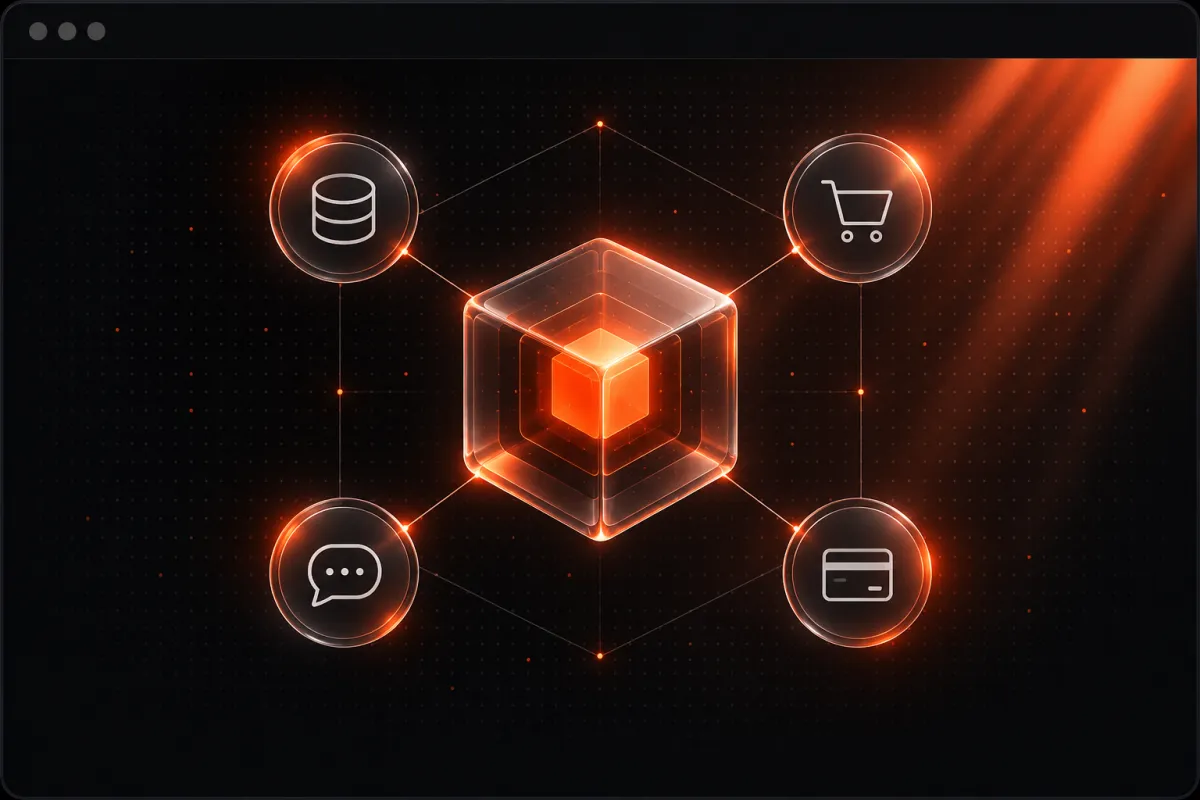
Your management system (ERP), customer database (CRM), payments, and WhatsApp exchanging data, with nothing typed twice.
-
 05
Mobile apps
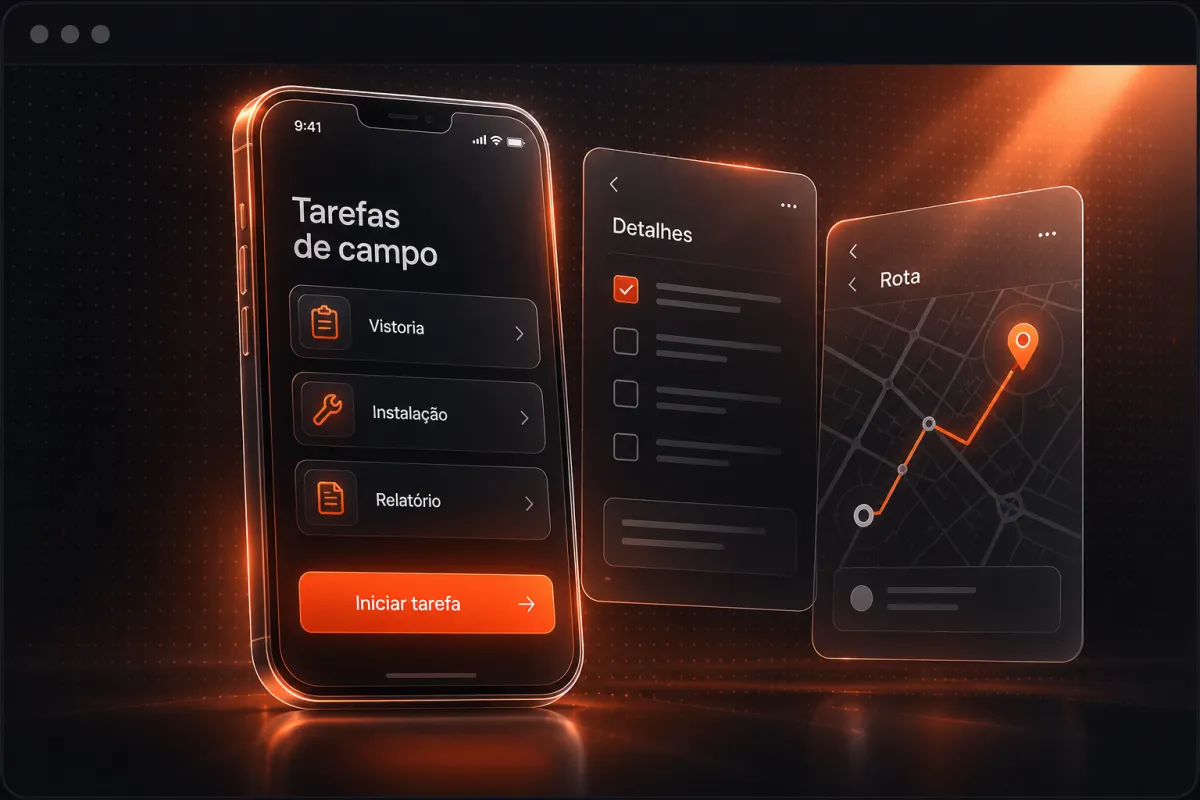
Apps for field teams and for customers, connected to the same system.
-
 06
Legacy systems that need to evolve
Rebuilt in parts, without stopping the operation or rewriting everything at once.
-
 07
Websites and online stores
Company websites, landing pages, and online stores, fast and connected to WhatsApp and your company's system.
A few projects we have built.
Systems, apps and websites built here, from the first sketch to the final screen. Open a project to take a closer look.
You follow the delivery before it turns into a surprise.
Three steps, and none of them starts without your approval.
We understand the bottleneck
We map the process and define what the first delivery needs to solve.
We agree on the plan
Scope, steps and investment come to you for approval before work starts.
We deliver and validate
You use versions that already work and check everything before it goes live.
See the six steps from the inside
The same AI that LenzStack applies in your company builds your system, with a person reviewing between one step and the next.
-
01Understand
AgentsTurn conversations, spreadsheets, and the current process into a task list.
One personConfirms what counts as done.
-
02Plan
AgentsPropose the architecture and the steps before the first line of code.
One personApproves the plan.
-
03Build
AgentsWrite code and tests in small, verifiable parts.
One personFollows every part.
-
04Review
AgentsDo a second read looking for defects, security flaws, and tests that pass without really testing.
One personDecides what goes in.
-
05Test
AgentsUse the screens the way a user would, on desktop and on mobile.
One personChecks the proof.
-
06Live
AgentsPublish, monitor, and evolve in short cycles.
One personApproves the release.
- OpenAI
- Python
- Claude
- React
- PostgreSQL
- Supabase
- Vercel
- TypeScript
- Next.js
- Node.js
- Cloudflare
- Vite
- Netlify
- Expo
The tools we use, picked case by case.
Widely used, well-maintained tools, with documentation, a large community, and predictable cost. The names besideabove are tools, not clients.
Meet Elenz.
Ask about timelines, pricing, integrations and data. She answers right away and, if needed, takes you to contact.
Hiring questions.
Pricing, timelines, integration, support, and data, answered up front. The rest are right below.
How much does it cost?
By quote. The price comes with the plan, once the problem is understood, and you approve each stage before it starts.
Can we start small?
Yes, and it's the most common way. First we solve the process that weighs the most; it goes into use, and the next parts come later, if they make sense.
How long does it take?
It depends on the project, starting at three weeks. The timeline for each stage comes with the plan, before work starts.
Can you integrate with the system I already use?
In most cases, yes. ERP, CRM, payments, and WhatsApp can exchange data with each other, with nobody typing the same thing twice.
What happens after it goes live?
You can continue with a monthly retainer for adjustments and new parts. If you'd rather go it alone, you get everything documented.
What happens to my company's data?
Before seeing any data, LenzStack signs a confidentiality agreement, and uses only what the project needs.
See 24 more questions
How does a project start?
With a conversation about the process that eats the most time today. From it comes a task list with a definition of done, and only then the plan and the quote.
Do I need to know exactly what I want?
No. Just describe how the work happens today and where it gets stuck. Turning that into a task list is the first step of the job, not yours.
What are the steps of the work?
Six: understand, plan, build, review, test, and publish. In each one, agents do the heavy lifting and a person approves before moving on.
Will I be able to follow the progress?
Yes. Delivery comes in small parts, and you see each one working early, so you can correct course before the project grows.
Who do I talk to during the project?
Luan, from start to finish. No handoffs between sales, a manager, and a developer: the person who understands the problem is responsible for the delivery.
Who is behind LenzStack?
Luan Saints, founder, in Curitiba, Brazil. He talks with you and builds the system, with AI agents speeding up every step. There's more about him on the About page.
How is it billed?
Per stage, at a fixed price. You approve the plan and the price of each part before it starts, and you pay for what was delivered.
Do you work with small businesses?
Yes. The starting point is a process that has outgrown the spreadsheet and the group chat, not the size of the company.
What does LenzStack do?
Seven things: custom systems, AI agents, process automation, APIs and integrations, mobile apps, legacy system evolution, and websites and online stores. Everything starts by understanding how your operation works.
Do you build mobile apps?
We do. Apps for field teams and for customers, connected to the same system, so the data doesn't end up scattered.
Can you keep the system I already have?
Almost always. The rebuild happens in parts, with the current system running while the new part comes in.
Can you get my process out of the spreadsheet?
That's the most common case. The process becomes a system built for the way the operation already works, and the repetitive part goes to the agents.
Can you automate WhatsApp?
WhatsApp can be connected to the system, with agents reading the messages, sorting what matters, and preparing the reply. Anything that's a decision stays with your team.
What can be automated?
Approvals, billing, reports, and everything that depends on someone remembering today. If it's repetitive and has a clear rule, it almost always can.
Where does artificial intelligence come in?
In two places: inside the product, as agents that read and organize the work, and in development, speeding up every step under a person's review.
What is an AI agent?
It's an AI routine that reads messages and documents, sorts what matters, and prepares the work, like an assistant who gets in before the team.
Will AI replace my team?
No. AI takes over the repetitive tasks, like reading, sorting, and copying, so your team spends the day deciding. More orders with the same team. In Sebrae's 2026 survey, 90% of the small businesses in Brazil that used AI kept the same number of employees.
What if the AI gets it wrong?
That's why there's always a person in the loop. What the AI prepares goes through rules, tests, and approval before becoming an action, and nothing goes live without review. Example: the agent reads an order that came in through WhatsApp and fills in the record. Before it becomes an invoice, someone on your team checks it.
Which AI model do you use?
Whichever serves the task best, among the most widely used on the market, such as those from Anthropic and OpenAI. The choice comes after understanding the problem.
Is Elenz an AI?
Partly. I guide the conversation with three questions and use AI to understand what you type and answer short questions, using only what's on this site. For price, timeline and the details of your case, the LenzStack team replies through the contact form.
Which technologies do you use?
First the problem, then the tool. Only widely used, well-maintained tools make the cut, with documentation, a large community, and predictable cost.
Do I own the code?
You do. Accounts, repositories, and data are in your name from the start.
Is the system secure?
Every part goes through a second read looking for defects and security flaws before it goes in, and the release only happens with a person's approval.
Can I switch teams later?
You can. Since everything is in your name and documented, another team picks up where we left off.
Let's find the first bottleneck to solve.
Tell us what takes up the most time in your operation. LenzStack replies within one business day to understand the scenario and see where to start.